
A two-machine display should answer one practical question: after stitching a seam, can the operator finish its edge without clearing the entire table? Use a pair of fabric rectangles and follow one seam from the sewing machine to the serger. The CE-5 and CE-8 give you two different arrangements to try.
Trace the seam on the CE-5
The CE-5 has a pneumatic lift at the main machine and a sliding tray for the overlocker. Its right-hand extension forms an L-shaped working area. Lay the stitched sample on the extension, turn toward the overlocker and notice where the rest of the fabric falls. Keep the area needed to open the looper cover free of baskets and offcuts.
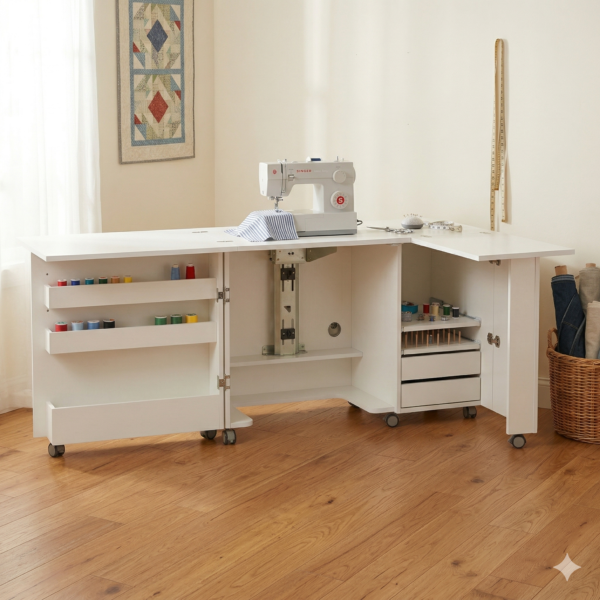
Repeat the job on the CE-8 layout
The CE-8 uses lift platforms for the two machines. Its four drawers, desktop basket and cable openings change where tools and leads can go. Choose a spot for snips that you can reach at either stage. Check that the pedal you want is easy to identify without looking under the table and that the other lead stays clear of the chair.
Write down the actual pairing
Record both machine model numbers, the position of each power inlet and the clearance above the serger with the thread stand raised. Ask the supplier to confirm the fit of both machines with their accessories attached. A cabinet being designed for two machines does not establish that a particular pair fits.
Compare the CE-5 tray layout and CE-8 twin-platform layout. Include both machine models when requesting a dealer quote.