
When a class or shop demonstration uses the same thread repeatedly, having a spare bobbin ready keeps the next seam from becoming a winding break. A separate bobbin winder needs very little equipment, but it does need a clear thread path and a way to keep look-alike bobbins apart.
Arrange the spool, guide and empty bobbin
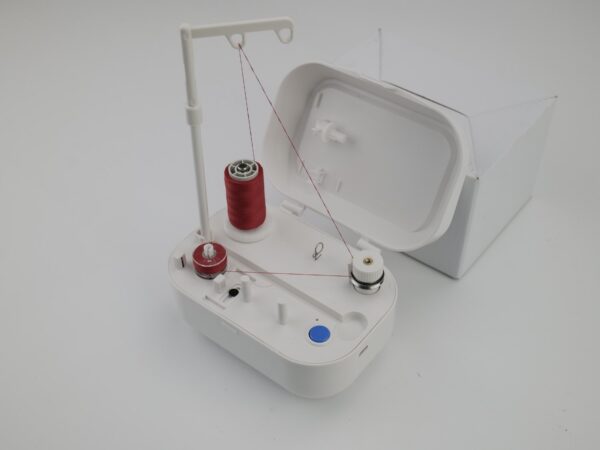
Open the case and raise the folding thread guide. Identify the separate spool and bobbin positions using the product photo. Put the winder on a clear part of the table where fabric from the main machine will not brush the spool. Check the bobbin type required by the sewing machine and confirm it is suitable for the winder before starting.
Inspect the first spare
Wind one bobbin first and look at how the thread is building across it. If it piles up on one side, stop and recheck the threading and seating before making a batch. Trim the loose tail with thread snips. Label the spare with the thread and machine it is for, especially in a shop where two clear plastic bobbins can look almost identical.
Reset between projects
Keep empty and wound bobbins in separate compartments. When the station is finished, put the blade cover back on the snips, lower the thread guide and close the winder case. The product gallery also shows the battery compartment underneath, useful when planning where staff can reach it.
See the bobbin winder thread-path and closed-case photos and the capped thread snips used for trimming tails.